Key Takeaways:
- Most misunderstandings about Israel begin with misunderstandings about the Jewish people, their history, and their indigenous connection to the Land of Israel.
- My work with HonestReporting reinforced a conclusion I had already reached through years of studying Jewish identity: Jews are a people, not a religious community.
- Making Aliyah is not a departure from my work. It is the continuation of a journey rooted in Jewish peoplehood, Jewish self-determination, and the belief that the Jewish people have a homeland.
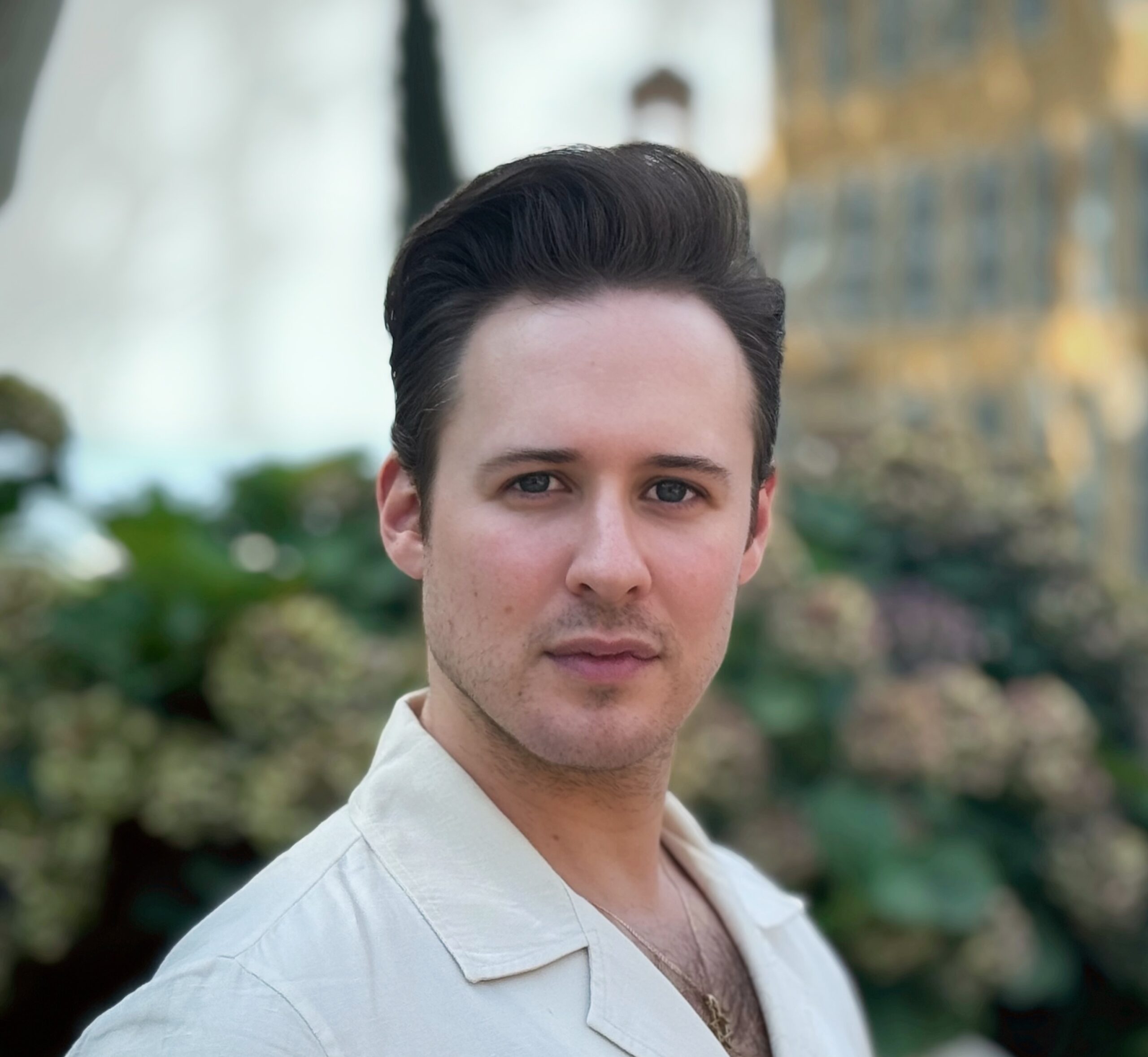
After living in Britain for most of my life, I am making Aliyah and moving to Israel. For many years, my work has focused on Jewish identity, Jewish peoplehood, and Jewish indigeneity. Since last year, I have also written for HonestReporting, analyzing headlines, examining news reports, and challenging inaccurate or distorted coverage of Israel.
On the surface, that work is about journalism. In reality, it is about something much deeper.
The Story Beneath the Headlines
By the time I began writing for HonestReporting, I had already spent years exploring questions of Jewish identity, Jewish peoplehood, and Jewish indigeneity. Through writing and researching Jewish identity, I had become increasingly convinced that one of the challenges facing Jews stems from a fundamental misunderstanding of who we are.
My work at HonestReporting reinforced this. Again and again, I encountered coverage that treated Israel as though it existed in a historical vacuum. Zionism was frequently discussed without reference to the Jewish people from whom it emerged. Israel was portrayed as an inexplicable anomaly: a colonial project, a foreign implant, a state whose existence required constant justification. The deeper I looked, the more I realized that many debates about Israel were not really about borders, governments, or policies. They were debates about who Jews are.
At HonestReporting, we often focus on correcting factual errors. We challenge misleading headlines, missing context, and double standards, while fighting against false narratives and educating the public to become better media consumers. Those interventions matter. But facts alone cannot resolve a misunderstanding that exists at the level of identity.
A person who believes Jews are merely a religious community will inevitably struggle to understand why a Jewish state exists. A person who sees Jews only through the lens of twentieth-century European history will struggle to understand a people whose story began in the Land of Israel thousands of years earlier. A person who has never encountered the concept of Jewish indigeneity will naturally view Zionism through frameworks developed for entirely different historical experiences.
Working with HonestReporting has reinforced something I have long known to be true: most arguments about Israel are ultimately arguments about whether Jews have the right to define themselves on their own terms.
An Am, Not a Religion
Through writing three books and engaging with Jewish communities around the world, I came to a conclusion that should be obvious but has become strangely controversial: Jews are an am, a people.
We are an indigenous people whose civilization emerged in the Land of Israel. Judaism is the cultural, spiritual, and ethical expression of that civilization. Jewish history did not begin in exile. It began in our homeland.
Once I understood that reality more deeply, my relationship with Israel began to change. Israel was no longer just a subject I wrote about or defended. It was no longer merely a country I visited. It became impossible to ignore the fact that the place at the center of Jewish history, Jewish memory, and Jewish civilization was also my homeland.
From Conviction to Citizenship
The question was no longer academic, because if I believe Jews are a people, what does that mean for my own life? If I believe Jewish self-determination is legitimate, what responsibility do I have to participate in it? If I believe Israel is the homeland of the Jewish people, why am I living somewhere else?
Those questions do not produce the same answer for every Jew. The overwhelming majority of Jews throughout history never had the opportunity to make Aliyah. Many Jews today will continue to build meaningful and vibrant lives in the Diaspora. But for me, the questions became impossible to ignore.
In many ways, making Aliyah feels less like a departure than a continuation. I will continue my work with HonestReporting and my broader efforts to advance Jewish Pride, Jewish peoplehood, and Jewish self-understanding. The conversation remains the same, but I will now be having it from Israel.
I am not making Aliyah because I believe Israel is perfect. No society is. Israel faces immense challenges, both internal and external. But it remains the greatest achievement of the Jewish people in two thousand years. It is the place where Jewish self-determination is not a theory but a reality.
Working with HonestReporting has reinforced something I have long known to be true. Many arguments about Israel are ultimately arguments about whether Jews have the right to define themselves on their own terms. Whether we are permitted to understand ourselves as a people, connected to our ancestral homeland, with the same rights afforded to other indigenous peoples and nations.
My answer is yes.
That answer is why I wrote about Jewish Pride. It is why I wrote about Jewish peoplehood and Jewish indigeneity. And it is why, this week, I will become an Israeli citizen.
For me, making Aliyah is the continuation of a journey that began with a simple question about how Jews understand themselves and ended with a simple conclusion.
The Jewish people have a homeland.
I am going home.
Liked this article? Follow HonestReporting on Twitter, Facebook, Instagram and TikTok to see even more posts and videos debunking news bias and smears, as well as other content explaining what’s really going on in Israel and the region. Get updates direct to your phone. Join our WhatsApp and Telegram channels!
© Divuach Ne’eman R”A, 2025