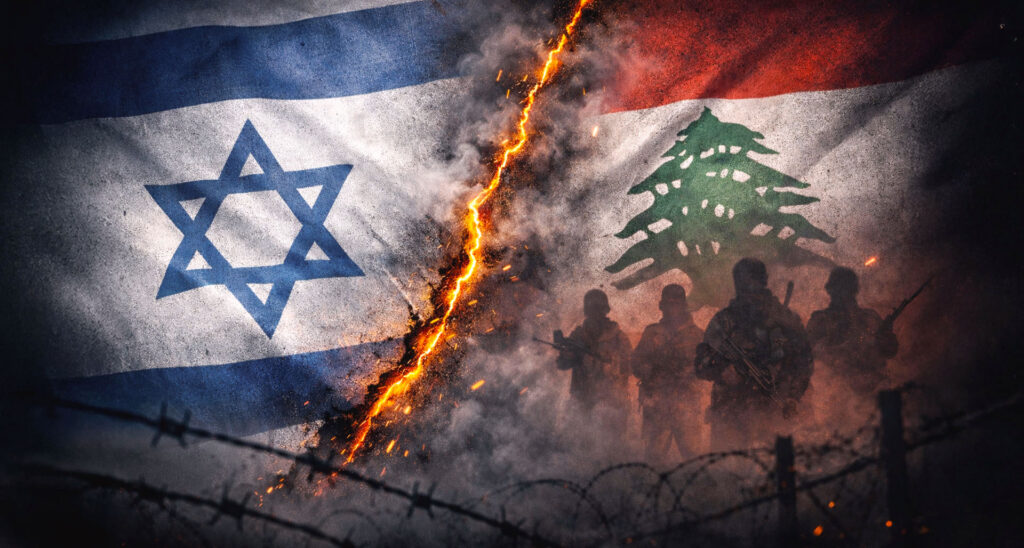
Since its founding, Israel’s northern border has been defined less by diplomacy than by persistent instability. The current talks between Israel and Lebanon, which began on April 14, are therefore not just another diplomatic development. They represent a rare moment shaped by decades of conflict, shifting non-state actors, and the steady erosion of Lebanese sovereignty.
These discussions are taking place against a backdrop that helps explain why progress has historically been so elusive.
View this post on Instagram
1948-1982
In 1948, Lebanon, wishing to show solidarity with its Arab brethren, played a limited role in the coordinated attack by Arab nations on the newly established state. This set the tone for relations defined by hostility without meaningful engagement.
By the end of the war, 110,000 Palestinians had fled to Lebanon as refugees. On March 23, 1949, Israel and Lebanon signed an armistice agreement, ratifying the internationally recognized border between the two countries.
By the mid-1950s, Prime Minister David Ben-Gurion had hoped for the Christian community to form its own state in Lebanon, enabling Israel to establish an alliance with the densely populated Christian country and thus create a coalition of minority groups in a Muslim-dominated region. However, the state never formed, and no formal relations were established between the two countries.
In 1967, Lebanon refrained from attacking Israel, largely due to its internal fragility and limited military capacity. Lacking a strong, unified army capable of battling the IDF, Lebanese leadership prioritized maintaining domestic stability over entering a regional war. At the same time, there was a clear understanding that Israel was unlikely to open a northern front so long as Lebanon did not provoke it, reinforcing the decision to remain on the sidelines.
After Israel’s historic defeat of several Arab countries, however, the dynamic of the Palestinian population in the Middle East shifted. No longer confidently able to rely on Arab countries for the destruction of Israel, many turned to the one neighboring country that did not lose territory to Israel during the war: Lebanon.
This dynamic was cemented by the Cairo Agreement of 1969, which granted the Palestine Liberation Organization (PLO), led by Yasser Arafat, autonomy within Palestinian refugee camps in Lebanon, removing the camps from the control of the Lebanese Armed Forces.
Related Reading: The Palestine Liberation Organization: What is the PLO?
In practice, this allowed Palestinian terrorist groups to operate with relative freedom, turning parts of southern Lebanon into a base for attacks against Israel and further eroding Lebanese sovereignty over its own territory. Though the agreement was declared null in 1987, the damage was done by providing nearly twenty years of authority to Palestinian terrorist groups.
From the moment the PLO set up its base in southern Lebanon, Israel’s northern border became all the more vulnerable to terrorist attacks. Throughout the 1970s, Palestinian terrorists conducted hundreds of cross-border raids into Israel, murdering innocent civilians. One such terrorist attack, known as the Ma’alot Massacre, perpetrated by the Popular Front for the Liberation of Palestine (PFLP), resulted in the murder of 25 Israeli hostages.
While an American-brokered ceasefire helped calm the tension temporarily in 1981, continuous violations by the PLO set the stage for the IDF to enter Lebanon in an effort to root out the terrorism that had become entrenched.
First Lebanon War: Operation Peace for Galilee
The ceasefire officially broke down when, on June 3, 1982, a Palestinian terrorist group shot and critically wounded Israel’s ambassador to the United Kingdom, Shlomo Argov, who, 21 years later, died of his injuries. On June 6, Israel formally entered Lebanon for the first time, hoping to achieve peace through the military operation Peace for Galilee.
Related Reading: The 1982 Lebanon War – Operation Peace For the Galilee
Over the course of the war, the IDF sought to remove the 23,000 terrorists who had embedded themselves in southern Lebanon, including those affiliated with Fatah. Israel, facing joint defenses from Syrian forces and PLO fighters, encircled and besieged Beirut while targeting PLO infrastructure from the air.
The siege ended in August with an agreement, under which roughly 14,000 PLO fighters were evacuated under the supervision of multinational peacekeeping forces, relocating to several countries, with Tunisia becoming the PLO’s new headquarters.
A peace treaty between the two countries would have been the next step, but Lebanese President Bachir Gemayel was assassinated.
Despite the exile of the PLO, smaller groups began to form in Lebanon, backed by the newly established Iranian regime that emerged after 1979. The Islamic Republic, hoping to export its revolution to Lebanon and establish an Islamic state there, trained, supported, and influenced guerrilla fighters to take up arms against Israel. These guerrilla fighters ultimately formed the first units of men who would soon unify under the Hezbollah banner.
The Lebanese army was still too weak to assert control, and the newly formed Hezbollah began to take advantage of the weak state to expand its influence on the poor, wartorn Shi’ite society in Lebanon, by providing social, religious, and educational services with the ultimate goal of recruiting new members.
On May 17, 1983, Israel and Lebanon signed an agreement with the U.S. as witness, formally declaring the end of the war. Additionally, the countries agreed to respect one another’s political independence and sovereignty and to maintain secure borders. This agreement and the involvement of the U.S. threatened Hezbollah’s foundation, which began to implement a political wing to achieve its terrorist objectives.
In June 1985, Israel began to withdraw troops from Lebanon but retained a security zone in the south. Controlling 1,500 square kilometers, the IDF had deployed 1,500 troops in addition to 2,500 allies from the Christian-led South Lebanon Army (SLA) to exert control over the area. While Hezbollah viewed the SLA as a weakened army that it could exploit to exert more attacks on Israel, the IDF perceived the SLA as a key ally that enabled Israel to limit troops and work towards a mutual goal of security.
This crucial security zone enabled the IDF to prevent further Hezbollah infiltrations in the country’s north. However, as the years went on, the number of Israeli soldiers who were killed increased.
1997 represented a particularly devastating year, when a collision of two IDF helicopters resulted in the death of 73 soldiers, and another 12 commandos were killed in an ambush. The tragedies underscored the mounting human toll in Lebanon and highlighted the growing challenge posed by Hezbollah’s entrenched presence. Campaigns to suppress Hezbollah frequently ended without any gains from the IDF.
An eventual full withdrawal occurred in May 2000, ending a 22-year presence. It also resulted in thousands of members of the SLA and their families fleeing to Israel to avoid Hezbollah reprisals. Despite the withdrawal, the security in Israel’s northern front began to be shaped by Hezbollah’s presence.
During this period, Hezbollah increased its focus on politics. In 1992, it won 8 out of 27 seats in parliament, enabling the group to begin manipulating Lebanese politics, especially at a time when peace agreements began to ripple through the Middle East. Israel’s withdrawal from southern Lebanon in a somewhat chaotic fashion, encouraged Hezbollah to claim victory over the IDF, further consolidating its popularity.
Following Israel’s withdrawal to the Blue Line — the border created by the UN — Hezbollah continued its attacks, viewing the IDF withdrawal as a defeat. Hezbollah leveraged this talking point to present itself as the resistance that was capable of “defending” Lebanese territory. The areas of the Blue Line, however, were in constant dispute, for it never defined an internationally recognized border between Israel and Lebanon, but rather attempted to serve as a temporary solution to separate the two countries.
In addition, the flashpoint area of Har Dov, also known as the Shebaa Farms, was used as a pretext for further Hezbollah aggression. Israel occupies the territory, which it considers to be part of the Golan Heights, captured from Syria in 1967, while Lebanon, with Syria’s backing, has claimed it as Lebanese land.
Second Lebanon War
In September 2004, the UN Security Council passed Resolution 1559, reaffirming Lebanon’s sovereignty and political independence, while calling for the dismantlement of all terrorist groups, including Hezbollah.
But this resolution did not prevent Hezbollah from continuing its frequent attacks against Israel. Hezbollah’s rocket arsenal continued to grow during this time, creating yet another threatening environment for Israeli civilians in the north.
On July 12, 2006, Hezbollah initiated a coordinated attack against Israel, firing rockets towards northern Israeli towns and infiltrating Israel’s border, kidnapping two Israeli soldiers, and killing five more soldiers who went to their immediate rescue.
Related Reading: The Second Lebanon War and Asymmetric Conflict
During the month-long war that followed, Hezbollah fired more than 100 rockets a day at Israeli cities, until the UN Security Council unanimously approved Security Council Resolution 1701, which called for an immediate ceasefire, disarmament of Hezbollah, and the withdrawal of Israeli troops. On August 13, the Israeli government accepted the resolution, which came into effect the following morning.
With Resolution 1701, the Lebanese Armed Forces and a UN Interim Force in Lebanon (UNIFIL) were to deploy in southern Lebanon. Still, both stated that they would not work to disarm Hezbollah.
Mid-2000s Until Today
As a result of the reluctance to disarm Hezbollah, the terrorist organization used the years following the Second Lebanon War to rebuild its capabilities. By 2015, estimates suggested that Hezbollah had amassed 150,000 rockets.
Despite being considered a time of relative quiet, the northern border in the 2000s and 2010s faced periods of rocket fire and a consistent Hezbollah presence.
In 2022, Lebanon and Israel agreed to sign a maritime deal after territorial disputes dating back to 2010 in the Mediterranean Sea increased the friction between the two countries. The American-brokered deal was a historic achievement, considering the countries had no diplomatic relations. It was an important first step in establishing a framework for indirect cooperation.
Related Reading: The Karish Gas Field Dispute: Understanding The Rise in Tensions Between Lebanon & Israel
As Hezbollah deepened its entrenchment in Lebanon, the Lebanese economy was facing collapse and weakening state institutions, in part due to Hezbollah’s destabilization as well as greater unrest in Lebanese society. The economic unrest is highlighted by a Hezbollah operative earning $2,200 per month in comparison to the $275 that a Lebanese Army soldier earns.
The manner of relations between Lebanon and Israel shifted again drastically following the Hamas-led terrorist attacks on October 7. Hezbollah joined the fight one day later by firing a barrage of rockets and artillery into Israeli territory, paving the way for yet another round of increased fighting between Israel and Hezbollah.
The war that ensued further displayed Lebanon’s inability to control Hezbollah, which had taken advantage of its standing as a “state within a state” to go to war with Israel, holding the rest of the country hostage to do so. It became clear that decisions regarding war with Israel did not rely on the Lebanese government alone, but were greatly influenced by Hezbollah.
View this post on Instagram
Following Israel’s pager attacks against Hezbollah terrorists and the assassination of then-leader Hassan Nasrallah, the IDF entered the country on October 1, 2024, to root out terrorist infrastructure and hold Hezbollah to UN Resolution 1701. When Israel and Lebanon agreed to a ceasefire in November 2024, it did not solve the underlying issue of Hezbollah’s control in Lebanon.
As a result, Hezbollah violated the ceasefire continuously, rebuilding its capabilities in the southern Lebanese towns and villages that the IDF had previously worked to empty of terror threats. Within the ceasefire, Israel was given the ability to strike when the Lebanese army could not, highlighting not only the Lebanese forces’ unwillingness to risk confrontation with Hezbollah, but their inability to remove Hezbollah threats.
Thus, when Israel re-entered Lebanon in March 2026, it was a direct result of Hezbollah’s violations.
Bint Jbeil in southern Lebanon is only a few kilometers from the Israeli border.
The Lebanese govt and numerous international orgs assured Israel that Hezbollah had moved north of the Litani River as required of it after the 2024 ceasefire.
So how is Hezbollah still embedded in… https://t.co/Ts781XqkFo
— HonestReporting (@HonestReporting) April 13, 2026
Throughout the fresh conflict, Lebanese President Joseph Khalil Aoun consistently called for direct talks with Israel. This desire for stability speaks volumes, considering that, according to Lebanon’s own laws, the country remains officially at war with Israel and considers it an enemy state.
Given the rocky history of the neighboring nations, direct talks between the two are a historic moment that underscores the desire for security, peace, and stability of both Lebanon and Israel. The talks that began on April 14 mark the first time the two countries have met directly since 1993.
The talks soon coincided with a 10-day ceasefire between Israel and Hezbollah, brokered by the U.S., in hopes that it could advance the peace talks between the two countries. While Hezbollah is not involved in the discussions, there is potential to undermine the terrorist organization by improving ties between Lebanon and Israel, which both view Hezbollah as a fundamental threat.
However, truly undermining Hezbollah requires the Lebanese government and army to apply its sovereignty and move beyond outlawing Hezbollah’s military wing, which the Lebanese government banned in March following Hezbollah’s return to firing rockets at Israel, but also its entire infrastructure, including political, economic, and social systems.
The continuation of talks provides a rare moment of cautious optimism for two countries long defined by conflict, where civilians on both sides have borne the consequences of Hezbollah’s presence.
At the same time, any lasting peace will require more than technical agreements or temporary ceasefires. The drivers of hostility – Hezbollah’s entrenchment and its ties to its Iranian patron – remain firmly in place. Addressing these challenges will demand sustained diplomatic effort, coordination, and meaningful changes on the ground within Lebanon.
Liked this article? Follow HonestReporting on Twitter, Facebook, Instagram and TikTok to see even more posts and videos debunking news bias and smears, as well as other content explaining what’s really going on in Israel and the region. Get updates direct to your phone. Join our WhatsApp and Telegram channels!
© Divuach Ne’eman R”A, 2025