Key Takeaways:
- CNN’s Isobel Yeung went to Lebanon to interview a variety of people aligned with or supporting Hezbollah. By failing to scrutinize her interview subjects, she provided a platform for Hezbollah’s messaging.
- Rather than challenging Hezbollah’s narrative, Yeung frequently adopted its framing of the conflict. Hezbollah’s role in sustaining the war, destabilizing Lebanon and endangering Israelis was omitted.
- The report prioritized access over accountability, allowing weapons smugglers, Hezbollah operatives, and supporters to advance their claims with limited pushback.
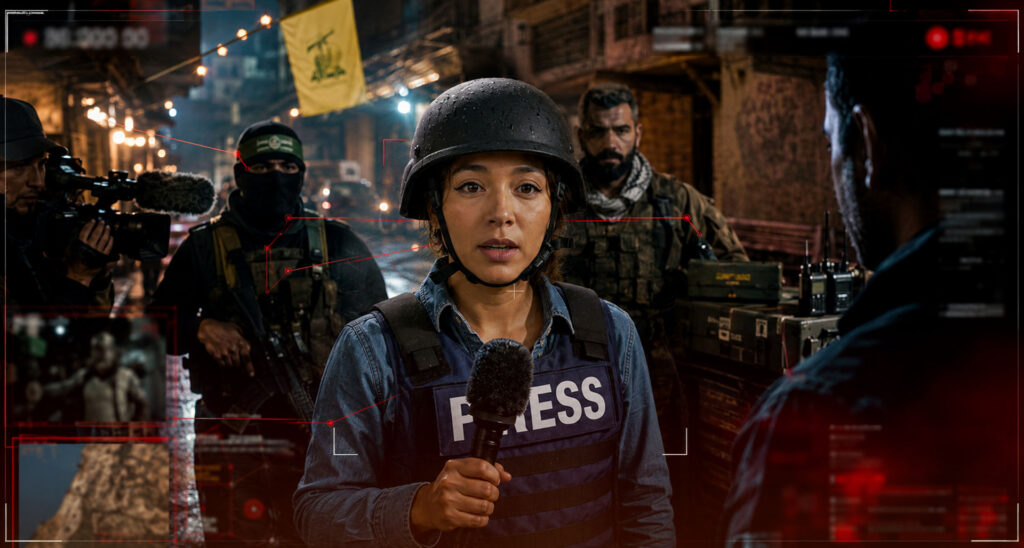
When CNN correspondent Isobel Yeung traveled to Lebanon to explore how Hezbollah is “still standing” after months of Israeli military pressure, she had an opportunity to examine one of the Middle East’s most deadly terrorist organizations at a pivotal moment.
Instead, her report, Inside Hezbollah, largely allowed Hezbollah-aligned voices to shape the narrative while leaving many of the group’s actions, responsibilities, and claims insufficiently challenged.
Throughout the 15-minute film, Yeung meets weapons smugglers, Hezbollah supporters, family members of Hezbollah operatives, and a man presented as a Hezbollah “fighter.” Yet rather than using these encounters to scrutinize Hezbollah’s role in destabilizing Lebanon, violating international resolutions, and rebuilding its military capabilities, the report frequently gives interview subjects space to advance the organization’s narrative with limited pushback.
Exclusive Access Comes With a Price
After months of “persuading” an arms dealer to meet with her and the CNN crew, Yeung is taken to a house in an undisclosed location in Lebanon’s Bekaa Valley, where she interviews a masked weapons smuggler.
Despite the fall of Bashar al-Assad’s regime in Syria, Hezbollah continues to exploit instability along the Syrian-Lebanese border, using Syria as a logistical corridor through which it receives weapons and military supplies.
Israel has repeatedly targeted these smuggling routes in an effort to prevent weapons from reaching Hezbollah. Meanwhile, Syria’s new government has also taken steps to curb cross-border weapons trafficking, signaling its willingness to reduce threats along Israel’s northern frontier.
Nevertheless, weapons smuggling remains a persistent problem, allowing Hezbollah to replenish its arsenal even after suffering significant battlefield losses.
Yet CNN’s report devotes little attention to the broader consequences of these smuggling operations. There is no meaningful discussion of how Hezbollah’s independent military infrastructure undermines Lebanese sovereignty, weakens the Lebanese Armed Forces, or contributes to Lebanon’s ongoing instability.
Instead, Yeung asks the smuggler whether the weapons are needed to “defend [the buyers] against Israel,” framing the issue through the lens of Hezbollah’s own justification for maintaining an armed force outside state control.
Missing from the discussion is the central reality that Hezbollah’s military presence in southern Lebanon and its repeated attacks on Israel are themselves a primary driver of the conflict.
Nor does Yeung challenge the smuggler on the role he plays in sustaining a terrorist organization’s military capabilities. Unsurprisingly, he is allowed to dismiss concerns about how the weapons are ultimately used without facing meaningful scrutiny.
The result is a portrayal that humanizes the smuggling network while largely overlooking its contribution to Hezbollah’s rearmament efforts.
A similar pattern emerges when Yeung meets a man presented as a Hezbollah operative, whom she describes as an “elusive fighter.”
Before the interview, Yeung correctly notes that Hezbollah is an “incredibly secretive group.”
Hezbollah rarely grants access to foreign journalists. When it does, reporters are expected to operate within the organization’s reporting guidelines. Rather than using this rare opportunity to question Hezbollah’s role in dragging Lebanon into conflict, violating UN Security Council resolutions, or rebuilding its military capabilities, CNN’s interview largely allows the organization’s narrative to go unchallenged.
Notably, Hezbollah’s Media Relations Office later issued a statement claiming that the interviewee was not a Hezbollah member and that the interview had not been coordinated through the group’s official media channels, while describing itself as the “sole entity authorized to coordinate any communication or interviews.”
1/@CNN‘s @IsobelYeung was probably pleased to land a powder puff interview with one of Hezbollah’s supposedly “elusive fighters.”
Now there’s another problem.
Hezbollah’s own media office says the man CNN interviewed is “not a member of the party in any way, shape, or form.”… https://t.co/LUxcmkBk8o
— HonestReporting (@HonestReporting) June 11, 2026
This raises significant questions not only about Yeung’s vetting of sources but also about the extent to which Hezbollah controls access and information available to foreign journalists.
The broader issue is a familiar one: when access to members or supporters of a terrorist organization becomes the priority, accountability often suffers.
Leading Questions to Hezbollah Supporters
Beyond interviewing Hezbollah terrorists, Yeung also speaks with their supporters and relatives.
In a cemetery containing the graves of Hezbollah members killed during the conflict, she interviews a young Lebanese man who lost friends and family members killed as a result of their involvement in the terror organization.
Throughout these exchanges, Yeung repeatedly refers to Hezbollah operatives as “fighters,” a term that risks obscuring the fact that Hezbollah is designated as a terrorist organization by numerous governments around the world.
Language matters. Describing members of a terrorist organization primarily as “fighters” can subtly shift perceptions, watering down their participation in a group responsible for decades of terrorism.
That framing continues when Yeung states that Hezbollah’s “greatest strength is the thousands of fighters willing to sacrifice their lives.”
While intended as an observation, the statement echoes Hezbollah’s self-image and presents its members through a lens of commitment and idealism rather than examining the nature of the cause to which they are devoted.
In another exchange, Yeung tells an interviewee that Israel is responsible for destroying neighborhoods, displacing people, and causing civilian casualties.
There is no dispute that Israeli military operations have had severe consequences in Lebanon. However, responsible reporting requires explaining why those operations occurred and the role Hezbollah played in triggering and sustaining the conflict.
A journalist’s responsibility is not simply to repeat one side’s framing of events but to provide audiences with the context necessary to understand them. Yeung has failed to do that.
Hezbollah’s Role in Lebanon
Since its founding in 1982, Hezbollah has worked to establish itself as both a military force and a political actor within Lebanon.
Taking advantage of periods of instability and state weakness, the organization developed extensive social, educational, and welfare networks that helped expand its influence while advancing Iran’s revolutionary agenda.
Over time, Hezbollah became deeply embedded within Lebanon’s political system, using its parliamentary representation and military power to shape national policy while maintaining an armed force independent of the Lebanese state.
Yet when Yeung interviews Hezbollah parliamentarian Ibrahim Al Moussawi, viewers are told that Hezbollah “stepped in where the state has failed.”
What is largely absent from the discussion is Hezbollah’s role in contributing to that failure.
The organization’s repeated military confrontations with Israel, its independent armed structure, and its alignment with Iran have all imposed significant costs on Lebanon politically, economically, and militarily.
Similarly, Hezbollah’s impact on Israeli civilians receives only limited attention.
At one point, the report notes that Hezbollah has caused “some civilian harm” in Israel.
That description understates the scale of the threat.
Hezbollah attacks have displaced tens of thousands of residents from northern Israel, destroyed homes and infrastructure, killed civilians, including children, and forced communities to live under the constant threat of rocket and missile fire.
Long before October 7, Israeli security officials warned about Hezbollah’s growing military capabilities and the possibility of a large-scale cross-border attack.
Yet viewers of Inside Hezbollah receive little sense of either the scope of that threat or the fears it has generated among Israeli civilians living near the border.
What Does This Say About CNN?
The issue is not that CNN interviewed Hezbollah terrorists, supporters, or individuals connected to the organization. Journalists should engage with all relevant actors, including those involved in conflict and terrorism.
The problem is that Yeung follows the script, avoids the hard questions that would make the terrorists accountable for their actions, and provides a platform for them to push their narrative without facing any challenges.
Related Reading: When Hezbollah Provides CNN Access, Propaganda Shapes the Coverage
When journalists are granted rare access to individuals connected to a terrorist organization, that access should be used to ask difficult questions, challenge unsupported claims, and provide viewers with the context necessary to evaluate what they are hearing. Too often, however, Inside Hezbollah allowed interviewees to present Hezbollah’s preferred narrative without sufficient scrutiny.
Responsible journalism requires skepticism, context, and a willingness to confront powerful actors with difficult questions, especially when those actors are members or supporters of a terrorist organization.
Viewers were promised an inside look at Hezbollah. What they received instead was a report that frequently echoed Hezbollah’s framing of events while offering limited examination of the organization’s responsibility for the conflict, its impact on Lebanon, or the threat it poses to Israeli civilians.
A rare journalistic opportunity ultimately became a missed opportunity for accountability.
Liked this article? Follow HonestReporting on Twitter, Facebook, Instagram and TikTok to see even more posts and videos debunking news bias and smears, as well as other content explaining what’s really going on in Israel and the region. Get updates direct to your phone. Join our WhatsApp and Telegram channels!
© Divuach Ne’eman R”A, 2025